If you haven’t been to the dentist in years, making that first appointment can feel like a bigger step than it really is.
You may be wondering whether the dentist will judge you for waiting, whether you will immediately be told that you need extensive treatment, or whether the appointment will feel overwhelming.
Returning to dental care does not automatically mean any of those things.
The first goal is usually to understand where your oral health stands today. From there, the dental team can explain what they find, discuss what deserves attention, and help you understand your options.
Twin Oaks Dental Studio specifically emphasizes judgment-free, transparent care and welcomes patients who have been away from dentistry for a long time. The focus is on what can be done moving forward rather than criticizing what happened in the past.
Will the Dentist Judge You for Being Away So Long?
This is one of the most common worries people have when returning after a long absence.
You may feel embarrassed about how much time has passed or about changes you have noticed in your teeth.
A long gap in dental care, however, is a reason to return, not another reason to stay away.
Twin Oaks Dental Studio emphasizes judgment-free communication and helping patients understand their options without pressure. You should feel comfortable telling the dental team how long it has been, what concerns you have, and what has made dental care difficult in the past.
That information helps the team understand how to approach your care now.
What Happens at Your First Dental Visit in Years?
The appointment may begin with a conversation about your dental and general health history.
The dental team may ask about:
- When you last visited a dentist
- Current tooth or gum concerns
- Pain or sensitivity
- Previous dental treatment
- Medications and relevant health information
- Changes you have noticed
- Your goals or priorities
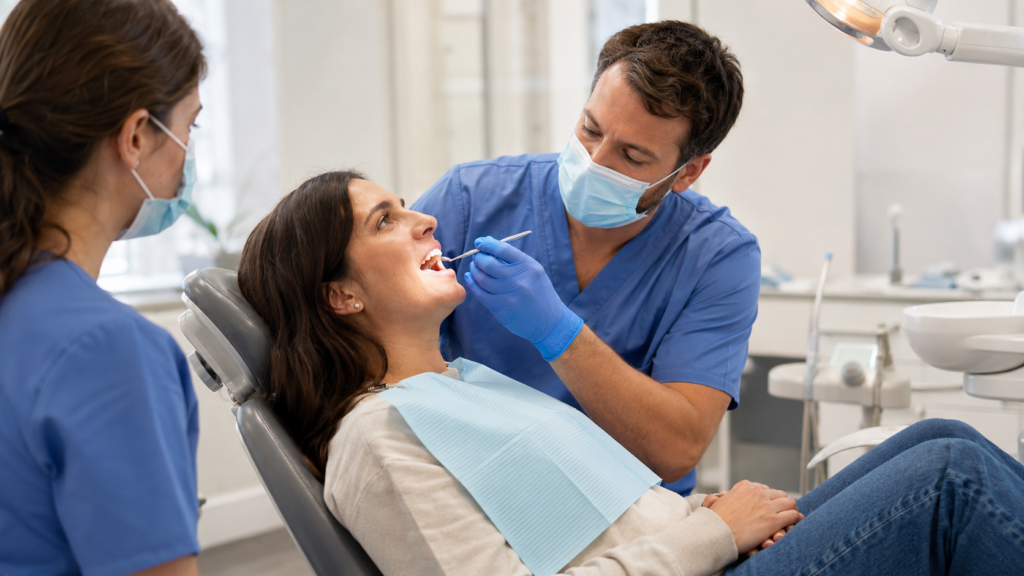
The dentist can then examine your teeth, gums, bite, and other areas of your mouth.
The purpose is to develop an accurate picture of your current oral health rather than assume what has happened during the years you were away.
Will You Automatically Need X-Rays or a Cleaning?
Not necessarily.
Diagnostic imaging may be recommended when the dentist needs information that cannot be obtained from the visual examination alone. The type of imaging considered should depend on the individual patient and clinical situation.
A cleaning is not necessarily automatic either.
For some returning patients, the first visit may focus primarily on examination, diagnostic information, and understanding the condition of the gums and teeth. The appropriate next step depends on what the dental team finds.
It is more useful to think of the first appointment as an evaluation and starting point rather than a fixed checklist that every patient follows.
What If the Dentist Finds Several Problems?
Finding more than one concern does not necessarily mean everything needs to be treated immediately.
The dentist can help organize findings according to priority.
For example, the discussion may distinguish between:
- Problems that need more prompt attention
- Concerns that can be monitored
- Treatment that may reasonably be planned for later
- Preventive steps that could help going forward
Twin Oaks Dental Studio emphasizes conservative, no-pressure treatment planning. When multiple options are available, patients should be given information about those choices and the opportunity to participate in deciding what makes sense.
The goal is to turn what may initially feel like a long list into a manageable plan.
What If You Are Nervous or Embarrassed?
Dental anxiety and embarrassment can make returning more difficult than the appointment itself.
Tell the dental team if you are nervous. You can also explain whether a previous dental experience, fear of treatment, or worry about being judged has contributed to the delay.
Clear communication gives the dental team an opportunity to explain what is happening before moving forward.
You also do not need to apologize for how long it has been.
Whether you are worried about plaque, broken teeth, discoloration, missing teeth, or simply the amount of time since your last appointment, the important information is what your mouth needs now.
The goal should be a supportive and informed experience, not a promise that every patient will feel completely anxiety-free.
What Should You Bring to the Appointment?
You do not need a perfectly organized dental history before making an appointment.
If available, useful information may include:
- A current medication list
- Relevant medical information
- Previous dental records
- Information about past dental procedures
- A list of current symptoms or concerns
- Questions you want answered
If records from a previous dentist are unavailable, that does not prevent you from starting again.
The dental team can begin with the information you have and evaluate your current oral health.
What Happens After the Examination?
After the dentist evaluates your mouth, you should have an opportunity to discuss what was found.
That conversation may include:
- Areas that currently appear healthy
- Problems that need attention
- Concerns that may be monitored
- Available treatment options
- Which issues deserve priority
- Recommended follow-up
- Preventive care going forward
This is also the time to ask why a particular recommendation is being made.
Twin Oaks Dental Studio’s approach emphasizes explaining options and helping patients participate in treatment decisions rather than simply handing them a list of procedures.
Will You Automatically Need Fillings, Crowns, or Other Treatment?
No one can know what treatment you need before examining your teeth.
Some people returning after years away may need restorative care. Others may mainly need preventive care, monitoring, or relatively limited treatment.
If a tooth does need repair, restorative dentistry may include options such as fillings, crowns, bridges, root canal treatment, dentures, or other appropriate care depending on the condition involved. These services are confirmed at Twin Oaks Dental Studio.
The important point is that returning after a long absence does not tell the dentist which treatment you need. The examination does.
Can Dental Treatment Be Spread Out Over Time?
Sometimes.
When more than one issue is identified, treatment may be organized into stages according to clinical priority.
Some problems should not be delayed. Others may reasonably be addressed later or monitored.
Useful questions include:
- What should be treated first?
- What can safely wait?
- What can be monitored?
- What options do I have?
- What happens if I delay a particular treatment?
This type of conversation can make a larger treatment plan easier to understand and gives you a clearer sense of what matters most.
What If Cost Is One Reason You Have Delayed Care?
Financial concerns are a common reason people postpone dental appointments.
Specific treatment costs, insurance information, financing, and payment options can change, so those details are best discussed directly with the practice.
From a treatment-planning perspective, you can still ask which findings are highest priority and whether some care may reasonably be staged.
That allows the conversation to focus first on your clinical needs while giving you information to make practical decisions.
What If You Need Several Types of Dental Care?
A patient returning after years away may have needs involving more than one area of dentistry.
Twin Oaks Dental Studio offers comprehensive dental care that includes general, restorative, cosmetic, implant, and orthodontic services.
That can make it easier to coordinate care within one practice when the needed services fall within the team’s scope.
“Everything Dentistry Under One Roof” is part of the practice’s positioning, but it should not be interpreted to mean that outside referrals are never appropriate. Twin Oaks’ own positioning more safely emphasizes fewer referrals and greater convenience.
Can You Get Back Into a Regular Dental Routine?
Yes.
Returning after several years is an opportunity to establish a new pattern of dental care.
Once your current concerns have been evaluated and addressed as appropriate, the dental team can recommend ongoing care based on your individual oral health.
The goal is not to make up for every missed appointment.
It is to create a routine that feels manageable and gives the dental team opportunities to monitor your teeth and gums going forward.
What Questions Should You Ask?
You do not have to understand everything immediately.
Before leaving the appointment, consider asking:
- What did you find?
- Which concerns need attention first?
- What can be monitored?
- What treatment options do I have?
- Why are you recommending this treatment?
- What happens if I wait?
- What preventive steps should I take?
- What should my next appointment involve?
Asking questions can help turn an unfamiliar treatment plan into something you understand and can make decisions about.
Returning to the Dentist Starts With One Appointment
If you have been putting off dental care for years, you do not need to solve everything before scheduling an appointment.
Start with finding out where your oral health stands today.
You may need treatment, or you may discover that your dental needs are more manageable than you expected. Either way, an evaluation gives you information instead of leaving you to guess.
Twin Oaks Dental Studio combines comprehensive dentistry with a transparent, conservative, judgment-free approach designed to help patients understand their options and move forward at a manageable pace.
If you are ready to return after years away, contact Twin Oaks Dental Studio to schedule an evaluation and take the first step back into dental care.