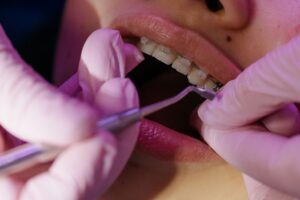
If your gums bleed repeatedly when you brush or clean between your teeth, or they stay swollen or tender, schedule a dental exam. These can be early signs of gum disease even when you feel no pain. They can also have other causes, and an exam can help determine what’s behind the change.
You don’t have to wait until the bleeding becomes heavier or eating feels uncomfortable. Even a small amount of bleeding is worth mentioning if it keeps coming back.

What Are the Early Signs of Gum Disease?
Early gum disease, called gingivitis, is inflammation in the gum tissue. Plaque, the sticky film that forms on teeth, can irritate the gums when it builds up along the gumline. The most useful signs to watch for are changes that repeat or last.
Bleeding when you brush or clean between your teeth
You might see a pink streak in the sink, a little blood on your toothbrush, or bleeding when you clean around a particular tooth. A single episode can happen after irritation, including brushing too hard. If you keep seeing blood, mention how often it happens and whether it’s usually in the same spot.
Keep brushing gently with a soft toothbrush. If floss or another cleaning tool is hard to use around that area, ask your dental team to show you a technique or suggest a tool that fits. Don’t press harder to see whether the bleeding has stopped.
Gums that look swollen or feel tender
Inflamed gums can look puffy or red, or feel sore when you brush. Healthy gum color varies naturally, so it’s more useful to notice a change from what’s usual for you than to compare your gums with a picture. If a sore spot or puffiness keeps returning, tell your dentist where you see it and whether it also bleeds.
Bad breath that keeps coming back
Persistent bad breath can occur with gum disease. It can also have other causes, including dry mouth. If the change continues despite your usual brushing and cleaning routine, bring it up at your exam. Tell the dentist about any bleeding or swelling you’ve noticed as well. That context can help guide what they check.
Other Changes Worth Checking
If your teeth look longer or you’re seeing more of the tooth near the gumline, the gums may be receding. Gum recession has several possible causes, and its appearance alone doesn’t tell you whether gum disease is involved. Let your dentist know if the area has become sensitive or if the gumline looks different from before.
A loose or shifting adult tooth, a new gap, or a change in the way your teeth come together also deserves a prompt dental evaluation. These aren’t typical early signs of gingivitis. In some cases, they can be associated with a loss of support around the teeth, but a dentist needs to check for the cause.
Gingivitis vs. Periodontitis: What’s the Difference?
Gingivitis affects the gums without causing loss of the bone that supports the teeth. It can often be reversed with appropriate professional care and consistent home cleaning. Periodontitis involves damage to the tissues and bone that support the teeth. It requires professional treatment and ongoing care to help control it.
The amount of blood you see, the color of your gums, and whether you feel pain can’t tell you which condition you have. Bleeding is a reason to get checked, even if your teeth still feel firm and your gums don’t hurt.
When Should You Call a Dentist?
| What you notice | What to do |
| Bleeding that keeps returning, ongoing puffiness or tenderness, or persistent bad breath | Schedule a dental exam, even if there’s no pain. |
| Pus near a tooth or gum, fever with dental swelling, severe pain, or swelling that’s getting worse quickly | Call a dentist promptly for guidance. Don’t wait for your next routine checkup. |
| Swelling that makes it hard to breathe or swallow | Seek emergency medical care right away. |
When you call, say when the change started and whether it affects one spot or several. If you’re unsure whether you need a routine or urgent visit, describe what you’re noticing so the dental office can advise you.
What Can a Gum Exam Tell You?
A dentist can look for inflammation, bleeding, or tartar around the gumline. They may use a small measuring tool called a probe to check the spaces where the gums meet the teeth. These measurements help show where the gums need a closer look. The dentist may also check whether any teeth are loose or use X-rays to look at bone support when appropriate.
The exam brings together findings that are hard to judge at home. For example, bleeding in one area could be related to irritation, while bleeding in several areas may lead the dentist to check for a wider pattern of inflammation. The dentist can also ask about your cleaning routine, tobacco use, medications, and health conditions that may affect your gums.
If the dentist identifies inflammation, ask where it is and whether there are any signs that the bone supporting your teeth has changed. Ask what kind of cleaning or follow-up is recommended and what you can do at home. Those answers give you a clearer picture of what needs attention and why.
How the Exam Guides the Next Step
If the findings point to gingivitis, the dentist may recommend a professional cleaning and show you how to reach places where plaque tends to collect. At a follow-up, the dentist can check whether the gums are less inflamed and whether the cleaning routine is working for you.
If the exam shows loss of support around the teeth, the plan may include a deeper cleaning below the gumline, closer follow-up, or referral to a gum specialist when appropriate. A spot that bleeds around one tooth may call for a different plan than several areas with signs of lost bone support. Ask the dentist to show you which areas need attention and explain how they’ll check whether treatment is working. If you’re referred, ask what the specialist will evaluate and who will handle follow-up care.
What Can You Do Between Visits?
Brush twice a day with a soft toothbrush and fluoride toothpaste, using gentle pressure along the gumline. Clean between your teeth daily with floss or a tool your dental team recommends. These habits help remove plaque. If it has hardened into tartar, a dental professional needs to remove it.
Keep up with regular dental checkups, and ask what schedule fits your gum health and risk factors. If bleeding or swelling is recurring now, call rather than waiting for the next scheduled visit. If you use tobacco, mention it at the exam so your dentist can factor it into your gum health assessment.
Get Your Gum Health Checked in Valley Park, MO
Twin Oaks Dental Studio provides gum disease prevention and treatment as part of its general and family dental care. If it’s been a while since your last visit, start by sharing what’s changed and what concerns you. You can ask the dentist to explain the findings and which next steps make sense for you.
Schedule a Dental Exam with Twin Oaks Dental Studio in Valley Park, MO.